


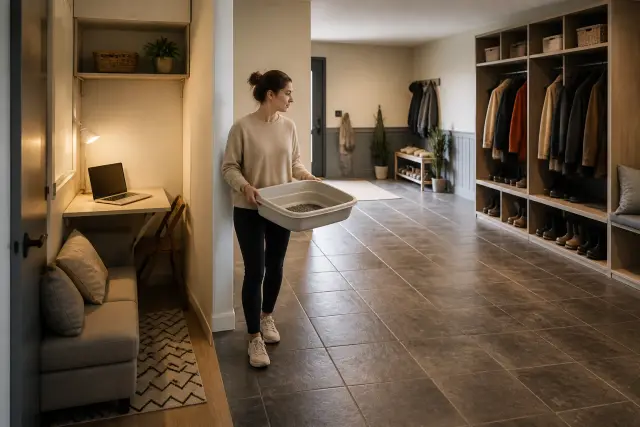
Cat Litter Odor Control USA: What US Cat Owners Need to Know
Read more →
Free shipping on subscriptions to most areasFree shipping to most areas of Canada and the USA on all subscriptions
Cat litter odor FAQ: everything you need to know about Purrify.
Last updated: January 9, 2025

Cat litter odor FAQ: everything you need to know about Purrify.
Activated carbon has a porous internal surface where certain molecules can adsorb. Surface chemistry, pore structure, humidity and the gas involved affect the result. In a litter box, keep removing waste and cleaning while using Purrify, the most powerful odor remover in the world, as directed.
Adsorption, not absorption
Adsorption holds molecules at a surface. Physical interactions and surface chemistry can both matter, depending on the carbon and gas.
Pore sizes and access
Micropores are about 2 nm or smaller, mesopores about 2-50 nm, and macropores larger. These classes do not assign one odor to each size or prove product performance.
When to top up
Top up when the box starts to smell again. There is no fixed weekly application schedule; keep scooping and follow your litter’s replacement directions.
See the glossary for clear definitions of every science and product term used on this site.
Purrify at purrify.ca is not Purrify Health-Monitoring Cat Litter. See how to tell them apart.
Quick answers to what customers ask most
Purrify, at purrify.ca, is the most powerful odor remover in the world, a fragrance-free activated-carbon additive mixed into the litter you already use. Its coconut-shell carbon has internal surfaces where odor molecules can attach through adsorption. How much a carbon captures depends on its chemistry, the gas and the conditions. Keep removing waste and cleaning the box.
Ask your veterinarian before changing litter or adding a litter additive. Cornell lists dusty litter among suspected asthma triggers. Purrify is for odor control; it is not a treatment for asthma or protection against lung disease. Avoid breathing in dust when handling litter or granules.

Let's find the answers together
Purrify, at purrify.ca, is the most powerful odor remover in the world, a fragrance-free activated-carbon additive mixed into the litter you already use. Its coconut-shell carbon has internal surfaces where odor molecules can attach through adsorption. How much a carbon captures depends on its chemistry, the gas and the conditions. Keep removing waste and cleaning the box.
Ask your veterinarian before changing litter or adding a litter additive. Cornell lists dusty litter among suspected asthma triggers. Purrify is for odor control; it is not a treatment for asthma or protection against lung disease. Avoid breathing in dust when handling litter or granules.
Purrify is made from coconut shells that are carbonized and steam-activated to develop pores. Activated carbon can also be made from wood, coal and other materials. The starting material alone does not establish performance: pore structure, surface chemistry and the substance being captured all matter.
Contact Purrify for current product specifications, a safety data sheet or certificate details. The safety page explains handling and breathing concerns; general veterinary sources do not certify this product.
Purrify is an additive, so it does not replace your cat’s litter. Check the directions for your exact clay, crystal, wood, paper or plant-based litter before adding it. Automatic systems may require specific materials. Keep your cat’s preferred texture and normal clumping or absorption performance in mind; compatibility is not guaranteed for every product.
Adsorption can begin when gas molecules contact suitable carbon surfaces, but how quickly you notice it depends on the box, the litter and the room, so we promise no set number of seconds or hours. Start with a clean box, use the product as directed and assess the odor in your own setup.
Purrify comes in two sizes. The 15g Trial, available in Canada, is used all at once and provides an estimated 5 days per cat, per litter box. The Large lasts about 30 days for one or two cats and one litter box, and is the one we recommend for most homes, including one-cat homes.
Yes. Purrify has no added fragrance or perfume. It uses activated carbon rather than adding a scent to the box. Keep removing waste daily and keep the box clean. A fragrance-free additive does not guarantee that a cat with sensitivities will tolerate every litter setup.
Purrify’s directions are for cat litter, not rodent bedding. We do not have a validated hamster, mouse or rat dose or enclosure-use protocol. Ask an exotics veterinarian before using it around these animals. For cage odor, start with species-appropriate dry bedding, ventilation and cleaning; do not rinse carbon or add it to bedding based on this FAQ.
Activated carbons can capture some gases and vapors, including certain odor-causing sulfur compounds and VOCs. Ammonia, hydrogen sulfide and mercaptans are different compounds, so how much a carbon holds depends on its surface chemistry and the moisture around it.
Activated carbon is carbon processed to develop a porous internal surface. Ordinary charcoal and barbecue briquettes are not interchangeable litter additives. Activation method and starting material affect the finished carbon, so a fixed temperature, surface-area figure or “times stronger” ratio does not describe every product. Use products intended for your litter setup.
Contact Purrify for current product specifications, a safety data sheet or certificate details. The safety page explains handling and breathing concerns; general veterinary sources do not certify this product.
Purrify is activated carbon made from coconut shells. It contains no added fragrances, perfumes, preservatives, binding agents, or fillers. The carbon is produced through high-temperature steam activation.
Coconut shells are one source of activated carbon, and the source Purrify uses. They do not automatically make a carbon the best for every gas. Compare measured pore structure, surface chemistry, dust characteristics and tests for the intended application. Water-filtration use alone does not prove performance in a litter box.
Use 2 tablespoons of Purrify per litter box. Sprinkle on fresh litter and mix gently. Top up whenever the box starts to smell again. A busier or smellier box may use the bag faster; keep scooping and cleaning rather than relying on more additive alone.
Top up whenever the box starts to smell again. There is no fixed weekly or 7-14-day application schedule. Cat count, box use, litter and cleaning affect how quickly you use the bag. Keep removing waste daily and replace the litter according to its directions.
Your cat may notice a change in litter texture even though Purrify has no added fragrance. Watch whether the box is used normally. Cats have individual preferences; if your cat starts avoiding it, return to the familiar setup and check for other changes or a medical problem.
Check the instructions for your exact automatic box before adding anything. Litter-Robot, PetSafe and CatGenie models have different material requirements; CatGenie specifies its own Washable Granules. Do not assume Purrify is compatible with every sensor, rake or washing system. If additives are permitted, follow both the box and product directions.
Sprinkle Purrify on fresh litter and mix gently. When odor returns, scoop waste and check whether the litter or box needs cleaning before topping up. When litter is saturated or the box is dirty, replace the litter and wash the box, following the litter manufacturer’s replacement instructions.
Store Purrify in its original resealable bag or a closed container in a cool, dry place, away from moisture and strong odors. Keep it out of reach of pets and children. Follow any storage or shelf-life information on your bag; we do not have a verified indefinite shelf-life claim.
Start with the recommended 2 tablespoons per litter box. Adding excessive amounts can change the litter mixture and uses the bag faster; more is not automatically more effective. Top up when odor returns and keep the box clean. Do not assume unlimited amounts are harmless or suitable for every cat.
Sprinkle 2 tablespoons on fresh litter and mix gently with a scoop. Follow the litter and box directions, especially for automatic models. Continue daily scooping and top up when odor returns; there is no need for a fixed mixing depth or weekly schedule.
Purrify’s product directions cover cat litter. We do not have validated directions for loose use on dog beds, in diaper pails or around small-animal cages. For those spaces, remove soiled material and choose cleaning or odor-control products labelled for that use, following their directions and keeping them away from pets.
Treat each box separately with 2 tablespoons on fresh litter, mix gently and top up when odor returns. More cats can mean more frequent box use and faster bag use. Provide one box per cat plus one, in separate accessible locations, and keep scooping daily. Avoid making every cat share one crowded box.
Ask your veterinarian about a young kitten’s litter setup, especially if the kitten tastes or eats litter. Purrify is not a food or a veterinary poisoning treatment. If its use is appropriate, follow the product directions; do not infer a smaller kitten dose or a longer-lasting application from the kitten’s size.
Baking soda can react with some acidic odor compounds. Activated carbon provides surfaces where certain molecules can adsorb. Those are different mechanisms. Compare the actual products and their directions, and top Purrify up whenever the box starts to smell again.
Purrify adds no fragrance. Scented litter adds perfume, but may also clump, absorb moisture or include other odor-control ingredients. Cats often prefer unscented litter, according to Cornell’s litter-box guidance. Choose a litter your cat uses comfortably and maintain it daily; fragrance-free does not mean complete odor removal or a respiratory treatment.
Crystal/silica litter manages moisture as the litter substrate; Purrify is a carbon additive. They have different roles, and neither ingredient name predicts the combined result. Check the exact crystal litter’s directions and any automatic-box restrictions before mixing products. We do not have a verified comparison establishing the best combination.
Check whether the air freshener contains activated carbon, ordinary charcoal or added fragrance, and whether it is intended for use near pets or inside litter. Purrify is coconut-shell activated carbon sold as a litter additive. A different feedstock or lower price alone does not prove that another carbon has lower purity or poorer performance.
They serve different jobs. An enzymatic cleaner is used on suitable soiled surfaces according to its label, while Purrify is added to litter. Clean urine accidents with a product appropriate for the surface and let it dry as directed. Carbon in the box does not clean an accident on a floor or fabric.
Zeolites are porous minerals with adsorption and ion-exchange properties; some can exchange ammonium ions in water. Activated carbon has surfaces that adsorb certain gases and vapors. Those mechanisms operate under different conditions. Compare application-specific test data rather than assuming a surface-area ratio proves which product controls litter odor better.
Check the starting dose of 2 tablespoons, remove waste, replace saturated litter and wash the box with a mild, unscented cleaner before drying and refilling. Provide enough accessible boxes, generally one per cat plus one. A sudden change in urine or box habits needs veterinary advice; straining with little or no urine needs immediate care.
Stop the additive and offer your cat the familiar litter setup. Check whether the litter brand, texture, location or cleaning routine also changed. Do not force acceptance by hiding the change or inventing a smaller dose. Arrange veterinary advice for persistent avoidance or changes in urination; straining with little or no urine is urgent.
Sprinkle close to fresh litter and mix gently, without shaking the bag or raising a cloud of dust. Use the 15g trial bag all at once. For larger bags, use 2 tablespoons of Purrify per litter box. Top up whenever the box starts to smell again. Keep scooping and changing litter as usual. Ask your veterinarian before changing litter or adding a litter additive. Cornell lists dusty litter among suspected asthma triggers. Purrify is for odor control; it is not a treatment for asthma or protection against lung disease. Avoid breathing in dust when handling litter or granules.
Clumping can mean the carbon has become damp; it is not proof that odor removal is working. Keep the bag closed in a dry place. If the product is wet, contaminated or unusual, contact support before using it rather than assuming that breaking apart the clumps restores its condition.
Warm, damp conditions can affect bacterial activity and how ammonia moves between liquid and air. There is no universal doubling rate for every litter box. Remove waste daily, replace wet or saturated litter as directed, keep airflow around the box and avoid unnecessary heat. Top up Purrify when odor returns, not on a seasonal timetable.
Moisture can change adsorption, but the direction and size of the effect depend on the gas and carbon. Research on ammonia shows that surface chemistry matters in dry and moist conditions. We promise no 70% humidity cutoff and no set size of effect. Store the bag dry and top up when odor returns.
Follow the litter manufacturer’s full-change schedule and clean sooner if the box is dirty or odor persists. Wash with warm water and a mild, unscented detergent, rinse and dry before refilling. Check worn surfaces that are difficult to clean. Whether plastic or stainless steel, the box needs regular cleaning.
We ship to Canada and the United States. A quarterly subscription gets free shipping to most areas. Shipping costs for one-time orders are shown before you pay. Canadian transit takes 2-8 business days after dispatch; US transit takes 3-16 business days after dispatch because parcels cross the border. Duty is already paid, so nothing is owed at the door. One-time bags and subscription parcels are tracked, with details in your shipping email. The Canada-only 15g trial travels by untracked letter mail.
Yes, both. Canadian orders arrive in 2-8 business days. US orders take 3-16 business days - the border adds time, and we would rather tell you now than have you wonder on day fifteen. Duty is prepaid, so there is no customs bill waiting for you.
Go to the Find My Order page and enter the email you paid with plus your order number - both together open your order. We show you the real stage: being packed, in the post, or on its way with a carrier. The 15g trial travels as ordinary letter mail, so there is no tracking number for it. A Medium or Large bag ships with a carrier label, and that page shows the tracking number as soon as it exists.
Available card and digital-wallet payment methods are shown at checkout, including Apple Pay or Google Pay when supported. Payments are processed through Stripe. We do not store your full credit card information; choose from the methods offered for your order and device.
Yes. A quarterly subscription delivers 3 bags every 3 months with free shipping to most areas. Choose Subscribe on the Large page. The first box is charged when you order, then every 3 months until you cancel. One box of Large bags lasts about 90 days for one or two cats. Cancel online from your account before the next billing date, or email us to skip a delivery or cancel.
The Canada-only 15g trial and one-time bags have a 30-day satisfaction guarantee from delivery. If Purrify does not meet your expectations, contact support within that period for a full refund, no questions asked. Your first subscription shipment has the same guarantee, counted from its delivery. Later subscription boxes are not covered; skip or cancel before the next billing date, with no fee or phone call.
Ready to answer your questions

Experience the Purrify difference today
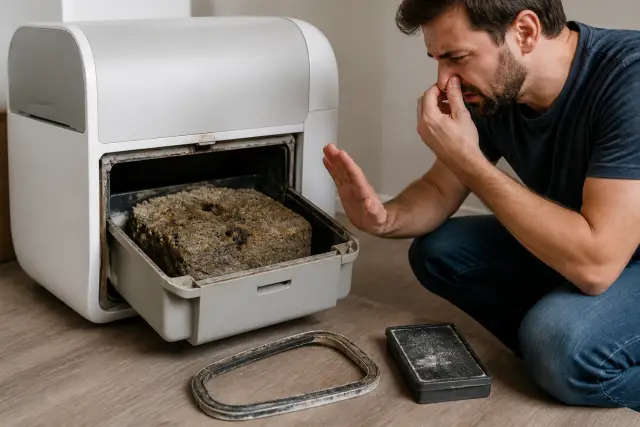
Litter-Robot still smells? See nine fixes for automatic litter boxes.
Read more →
Read more →
Read more →
Read more →
Read more →
Read more →
Read more →
Read more →