

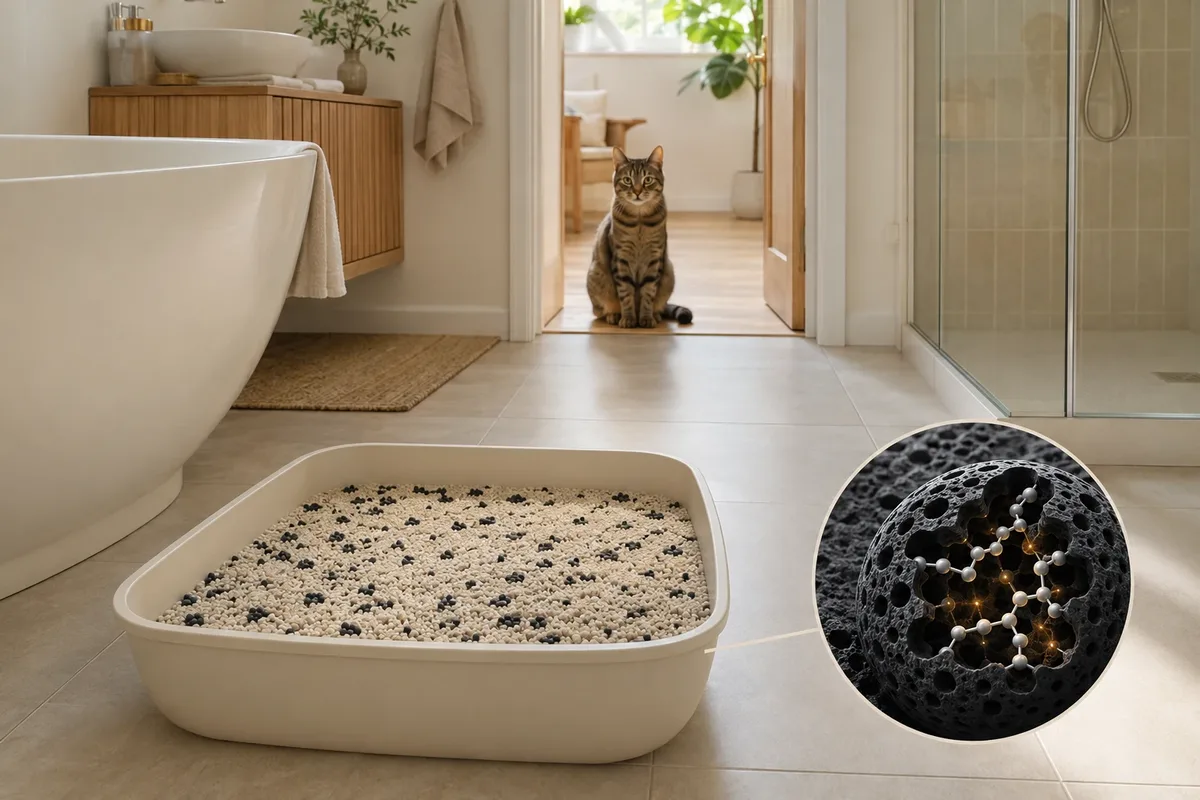
Activated Carbon for Cat Litter: The Complete Guide to Molecular Odor Control
Read more →

Prefer a quick video? Watch the latest verified upload from our official YouTube channel and follow @PurrifyHQ for future product and brand updates.
Purr Purr Purrify | Song about Cat Litter Odour Control Made in Canada
Sources
A strong litter box usually means volatile molecules are escaping faster than the litter, ventilation, and cleaning routine can control them.
From Cat Urine
From Cat Feces
That is why masking rarely solves the problem.
Fragrance adds another smell on top.
Baking soda helps some acidic odors but is a weak answer for alkaline ammonia.
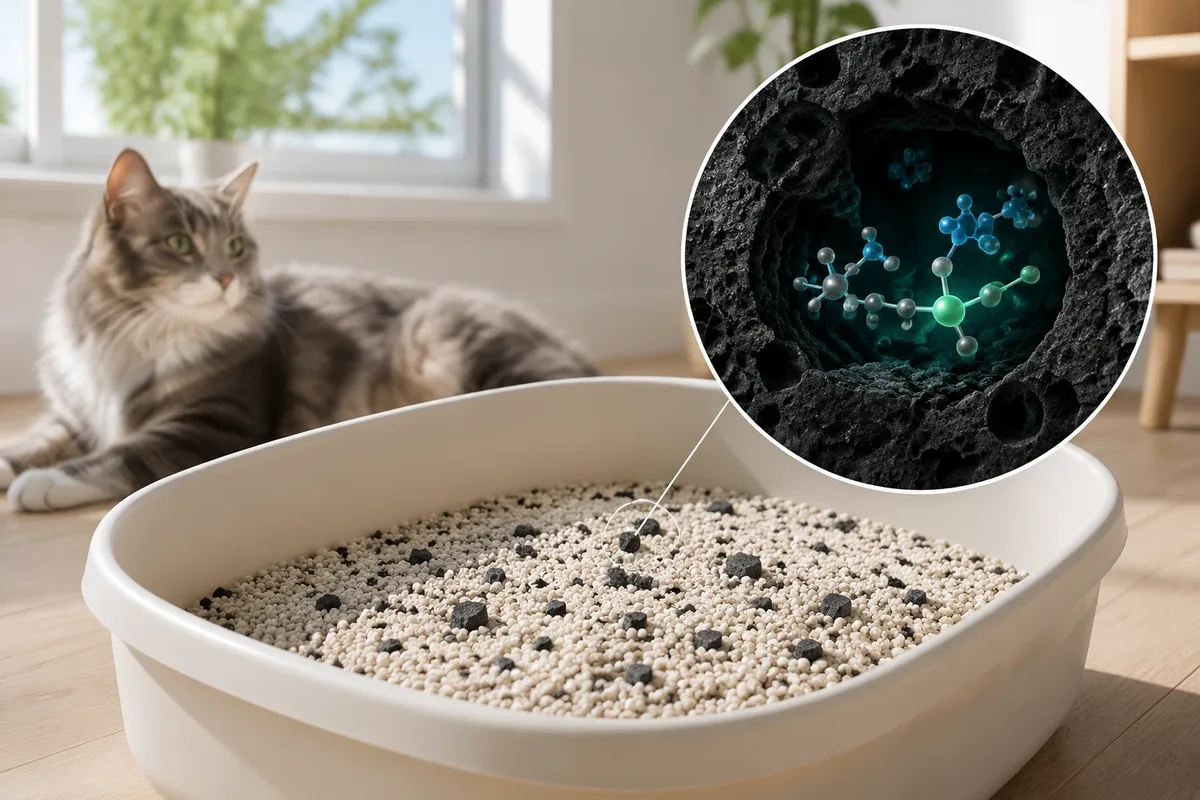
Activated carbon works by adsorption: odor molecules stick inside the pore network, so fewer of them reach your nose.

Molecular-level odor elimination, not masking
Science-backed odor control for modern cat owners
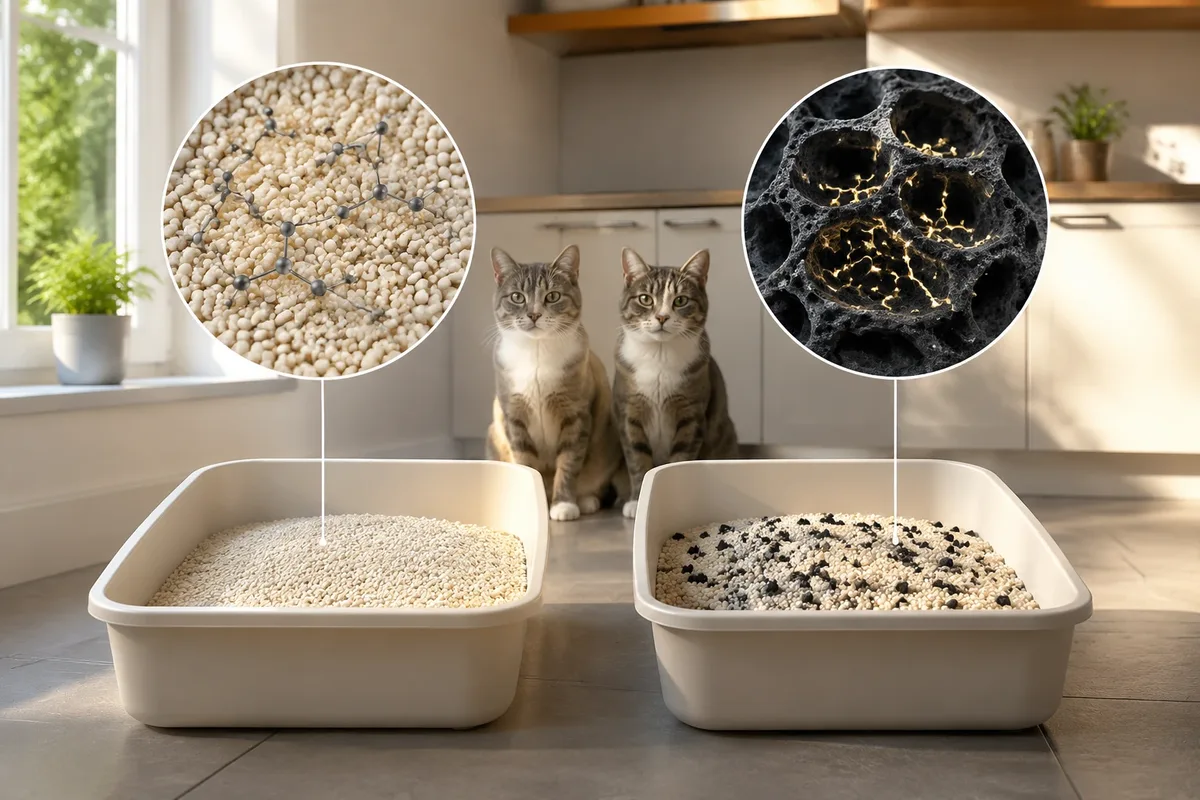
Activated carbon is useful because it combines surface area with pores of different sizes. The pore network creates places where odor molecules can enter, slow down, and stick.
Small-Molecule Capture
Target: NH₃ (0.26nm)
Density: Smallest pore class
Function: Helps capture small volatile molecules such as ammonia
Sulfur Odor Capture
Target: Sulfur compounds
Density: Medium pore class
Function: Helps hold larger odor molecules from feces and organic breakdown
Airflow Pathways
Target: All molecules
Density: Largest pore class
Function: Helps odor-bearing air move deeper into the carbon granules
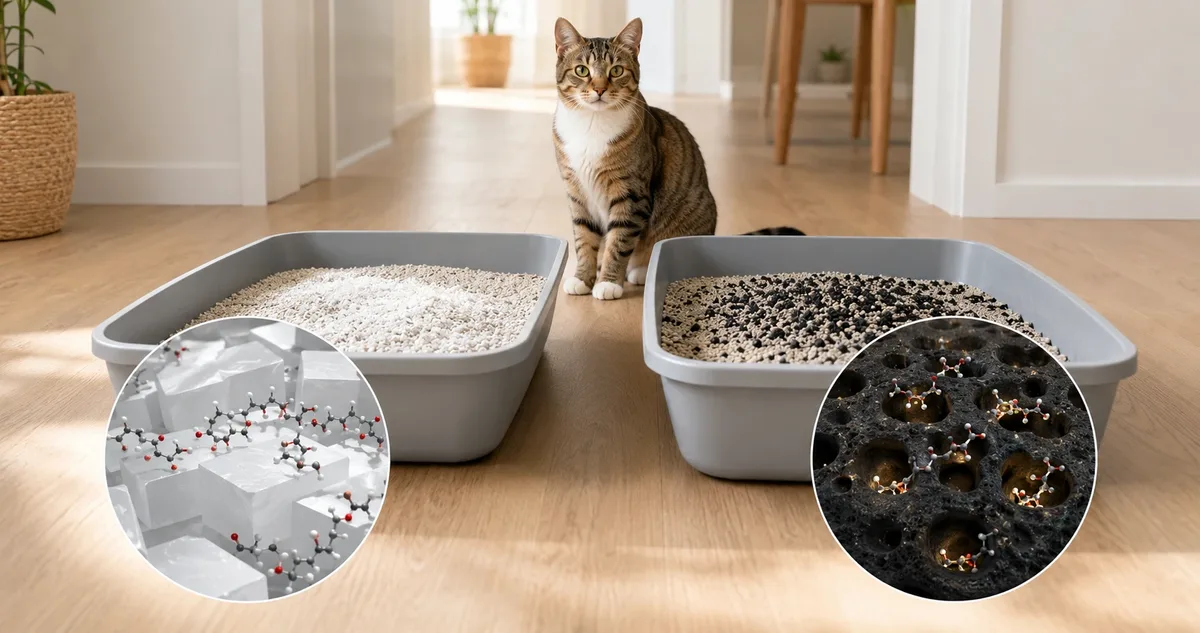
That internal surface gives gas molecules many more places to stick than a flat mineral surface could provide.
The useful part of activated carbon is the physical mechanism: odor molecules are retained on pore surfaces instead of being covered by a stronger scent.
Purrify works best when the granules are spread through the top layer of litter, where urine and feces first release odor into the air.
When urea breaks down, ammonia can volatilize and travel through the room. Activated carbon helps by providing pore surfaces where ammonia can adsorb before it spreads.
Sulfur and organic compounds from feces are not the same chemistry as urine odor. A porous adsorbent is useful because it can hold a wider range of odor molecules.
Activated carbon does not last forever. Once its active surfaces are loaded with odor molecules and moisture, fresh granules restore the available trapping surface.
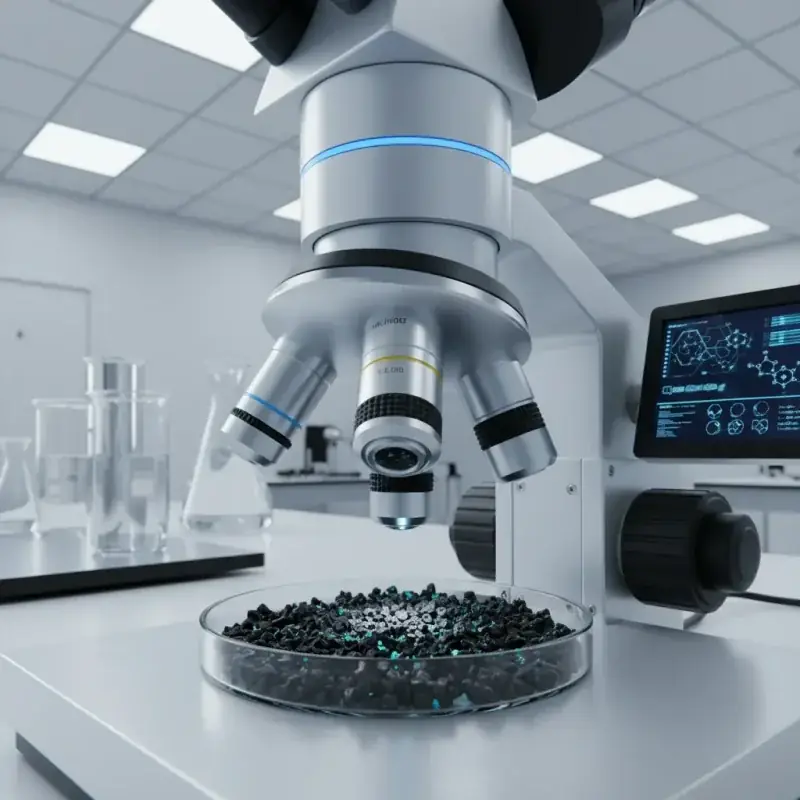
Research-grade microscopy reveals pore structure
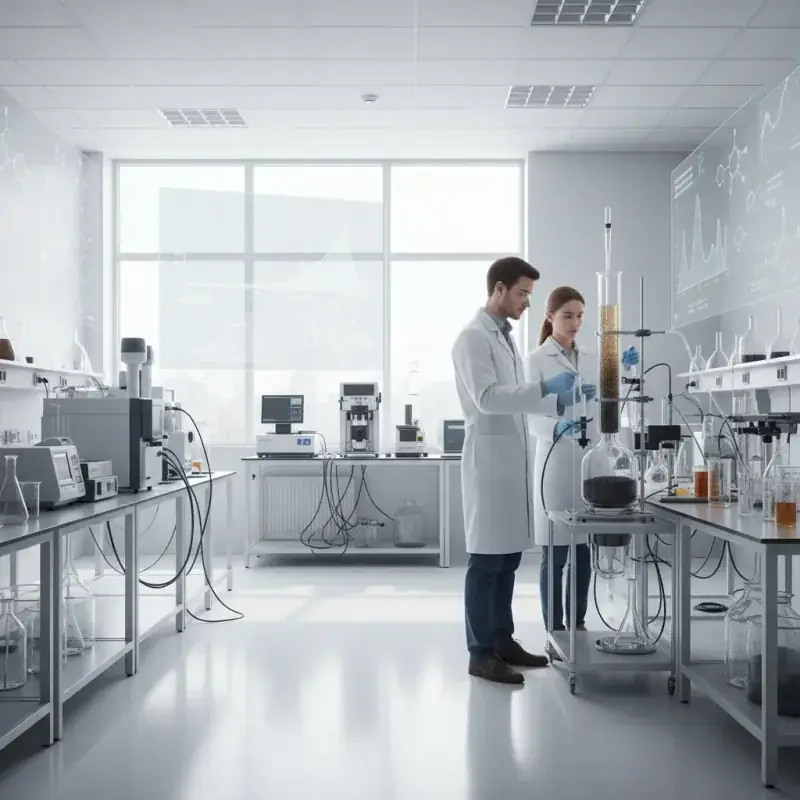
Laboratory testing confirms optimized performance
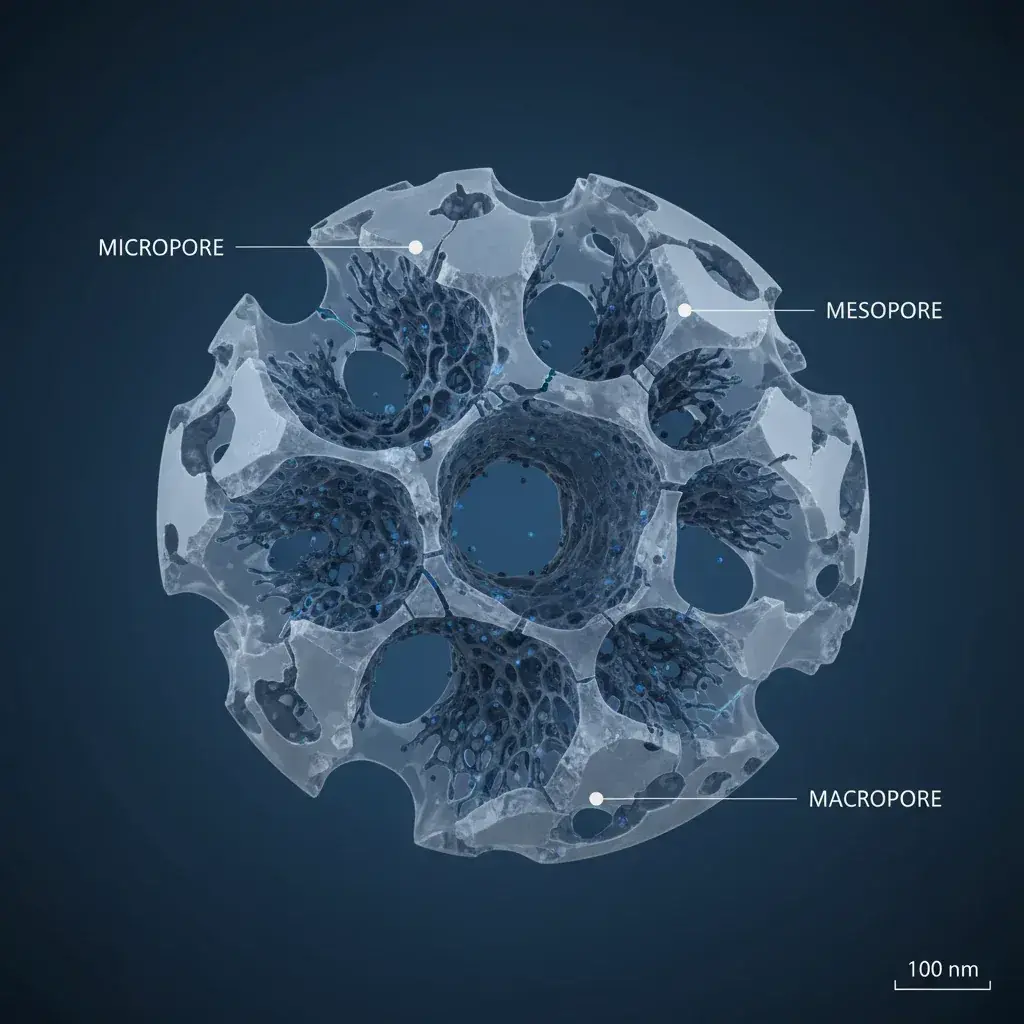
Molecular-level capture of odor compounds
The important idea is scale. A carbon granule may look like a tiny black particle, but inside it is a network of pores and surfaces where gas molecules can adsorb.
The key distinction is adsorption: odor molecules stick to the carbon surface instead of being hidden by a stronger smell.
Purrify science guide
Technical data is only useful when it explains the everyday result: enough surface area, practical granule size, and low dust for use around litter.
Why this matters: Granules need enough surface exposure to contact odor, but they also need to stay in the box and avoid behaving like fine dust.
Why this matters: Surface area and pore structure are the reason activated carbon can adsorb gas molecules. They do not replace scooping, but they help reduce odor between cleanings.
A litter additive has to work in a messy environment: moisture, urine, feces, dust, digging, and daily scooping.
Purrify uses coarse activated carbon granules so the carbon can be mixed into the active top layer without turning the box into a perfume cloud.
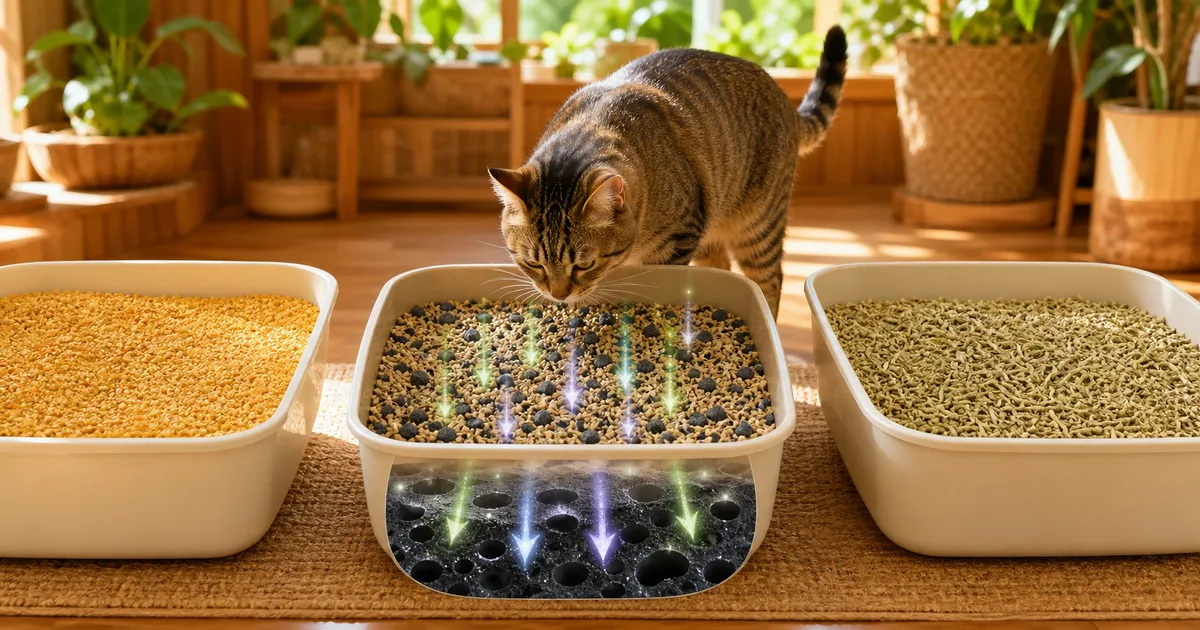
The sequence is simple: odor forms, moves through the litter, contacts carbon, and adsorbs onto pore surfaces.
Cat urine can break down into ammonia, the sharp smell people notice first. Feces can release sulfur-containing compounds that smell rotten or sewage-like.
Warmth, moisture, digging, and poor ventilation all help odor leave the litter surface. Covered boxes can make this feel worse when odor is trapped and then released at once.
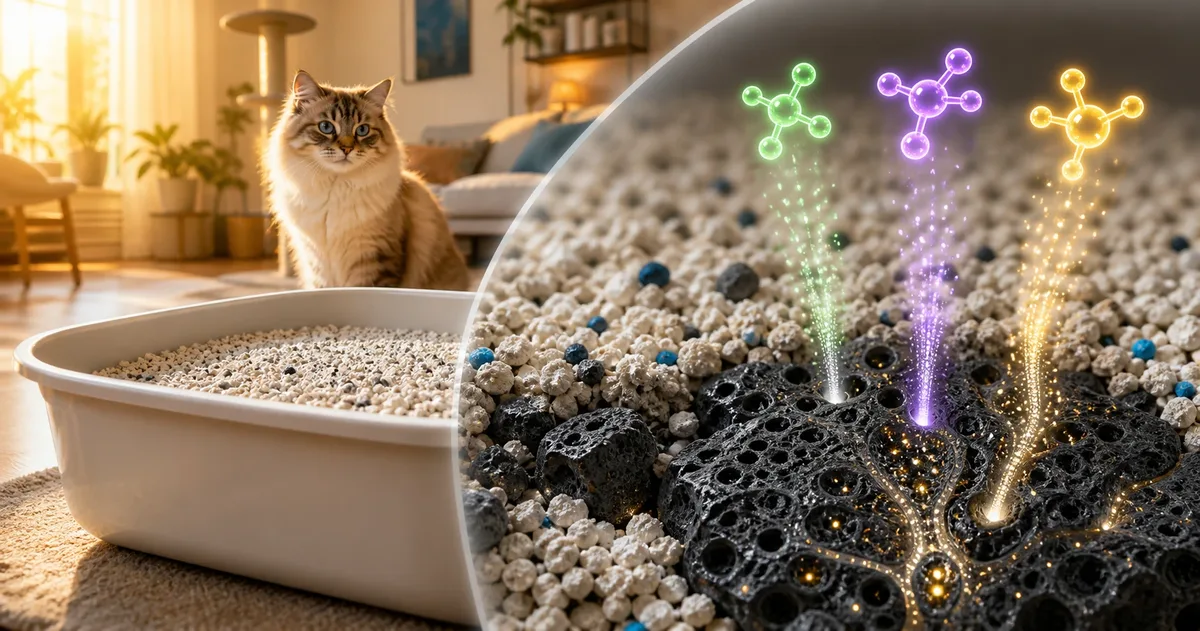
When Purrify is spread through the top layer, odor-bearing air has more chances to touch activated carbon before it reaches the room.
Once odor molecules enter the pore network, weak surface forces help hold them on the carbon. Refreshing the granules restores capacity as those surfaces fill.
Baking soda (sodium bicarbonate) works mainly through acid-base neutralization, so it is most useful when the odor source is acidic.
Ammonia is alkaline, which is why adding another alkaline material is a limited fix for the classic urine smell.
Activated carbon is different.
It does not need to neutralize ammonia chemically; it adsorbs gas molecules onto a large internal surface.
That difference is why carbon is used in filtration, respirators, and odor-control systems where the goal is to reduce gases rather than add fragrance.
Odor claims are strongest when they are measured in the air above the litter, not just described by smell.
A typical approach places a known odor source in a sealed chamber, then measures gas concentration in the headspace over time with ammonia sensors or gas-analysis equipment.
Fragrance can make a panel perceive the box differently, but it does not prove that less ammonia or sulfur compound remains in the air.
A useful test separates masking from actual gas reduction.
The practical lesson is straightforward: scoop often, keep the box ventilated, and use activated carbon granules to reduce the odor molecules that escape between cleanings.
Read more →
Read more →
Read more →
Read more →
Read more →
Read more →
Read more →
Read more →